

Patterns
Patterns remove extra work that the brain has to do when trying to understand something.
The human brain is an incredible prediction machine, and it evolved like so in order for us to navigate reality. What we experience externally is a controlled hallucination of what is happening outside of our skulls and the brain continually uses predictions in order to conserve energy.
When you do anything outside your normal routine, you experience a low-level of discomfort. This is because your brain has to work harder to interpret what’s happening. Its pattern matching abilities for new things are non-existent, so it has to make new ones.
Think back to when you were learning how to drive (or doing anything for the first time), the immense amount of concentration required. This is because the brain didn’t have the required information to make predictions about indicating, turning, changing gears etc. It didn’t have the correct patterns.
In visual design, consistent spatial patterns enable the brain to predict what’s coming next, and thus reduce the amount of concentration needed to absorb information. Without patterns it has to make ongoing predictions, and that distracts from reading, listening and learning.
But patterns can be deceiving, they can lull us into a kind of daze. We need to subtly alter visuals here and there in order to keep the brain on its toes, lest it go on autopilot.
— Simple Patterns
-
![]()
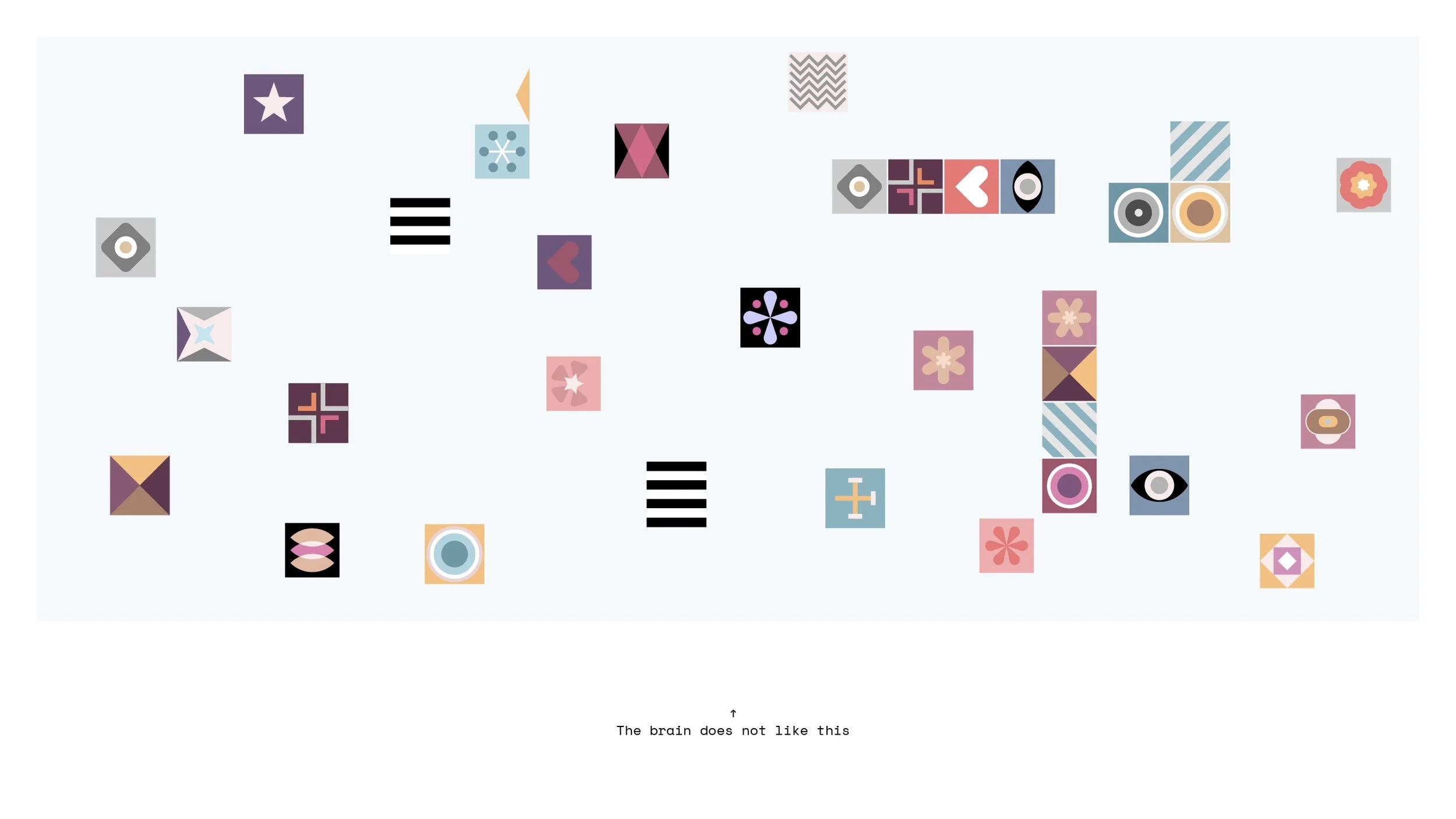
Disconnection — There is no order here, no way to connect each separate element together into some kind of meaning.
-
![]()
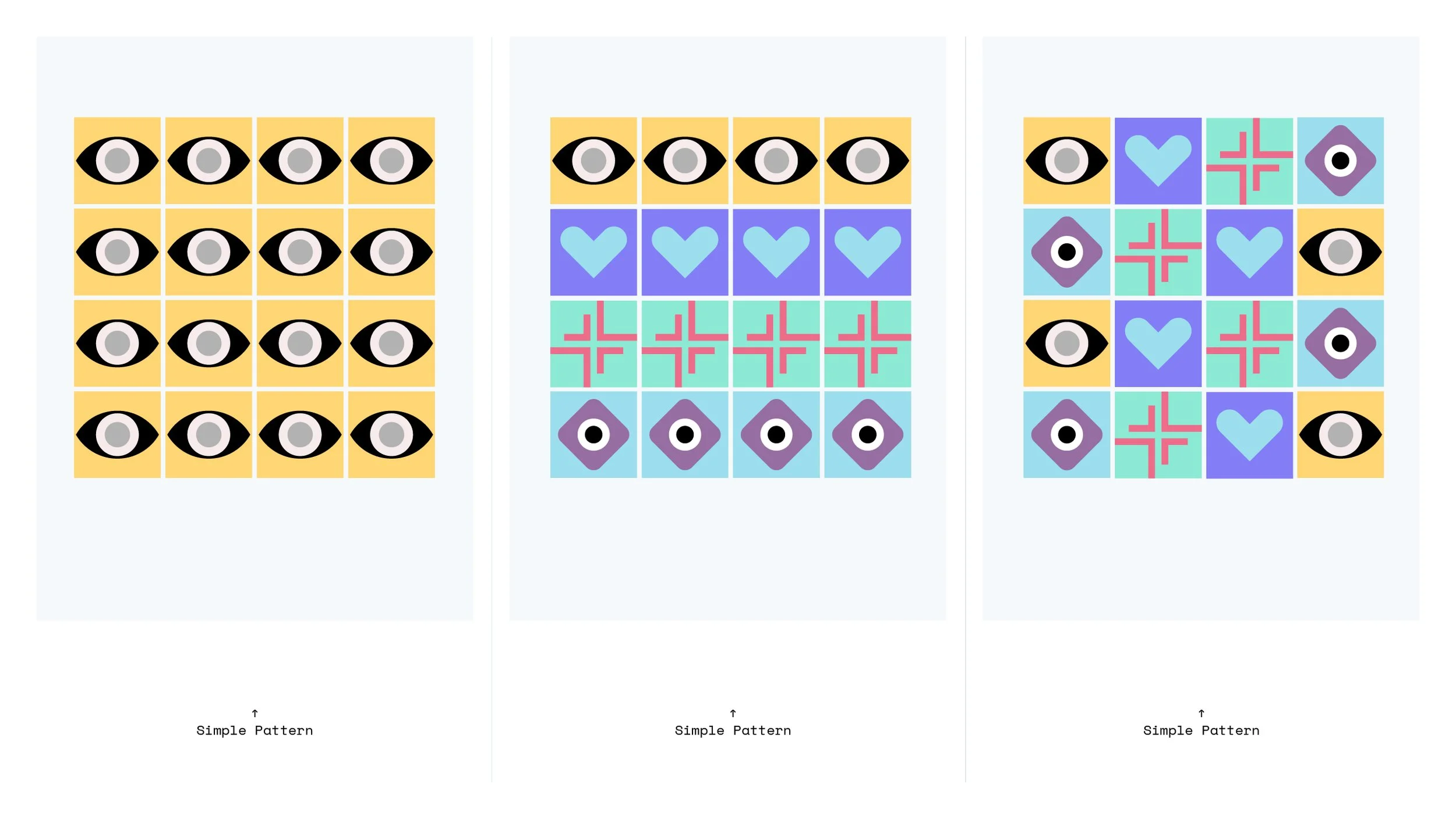
Connection — Each step here is simply organised. The brain can follow each of these patterns easily.
— Grouping Patterns
-
![]()
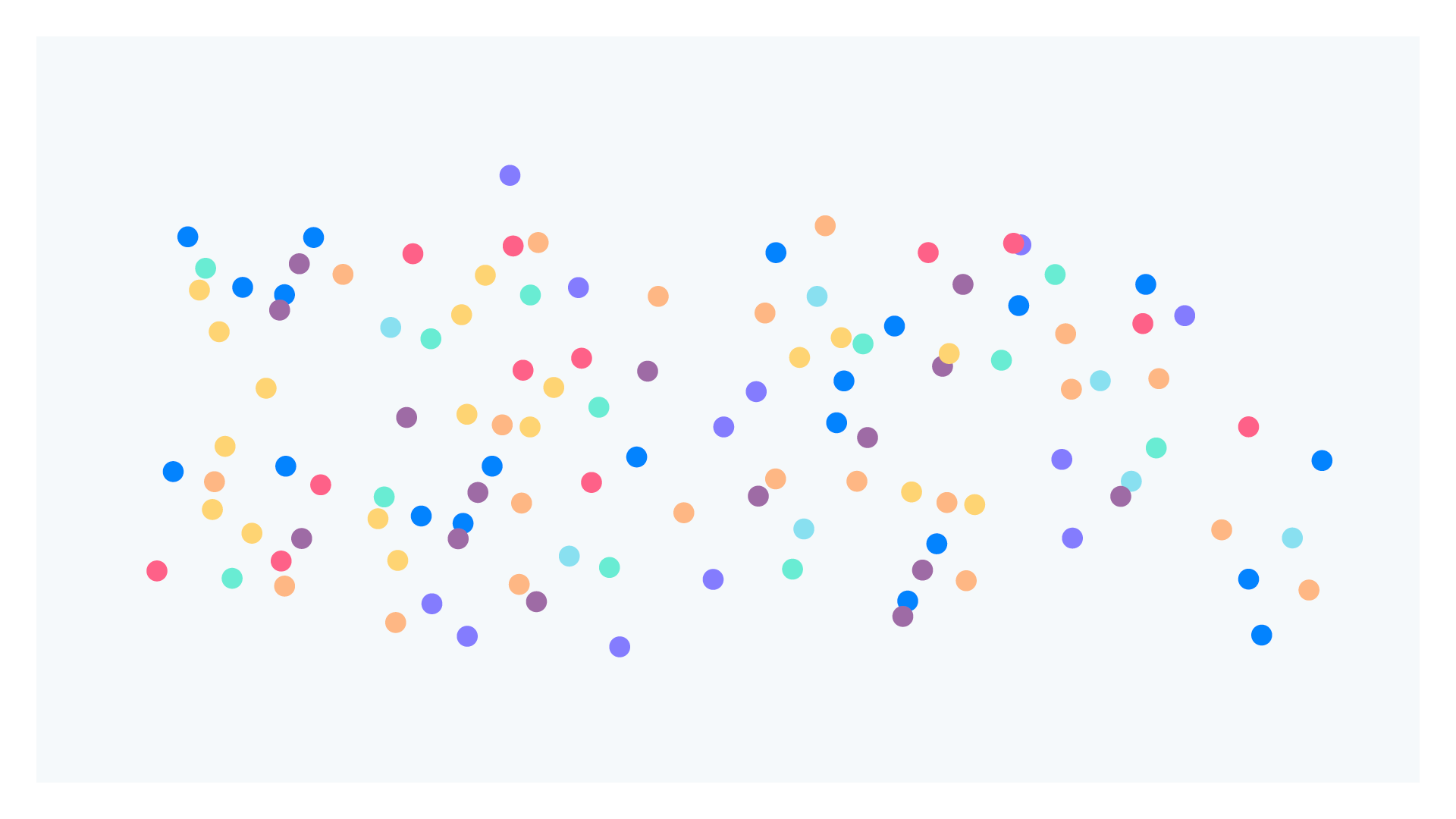
Peekaboo — If you look at this image long enough, you will be able to find a pattern in the chaos.
-
![]()
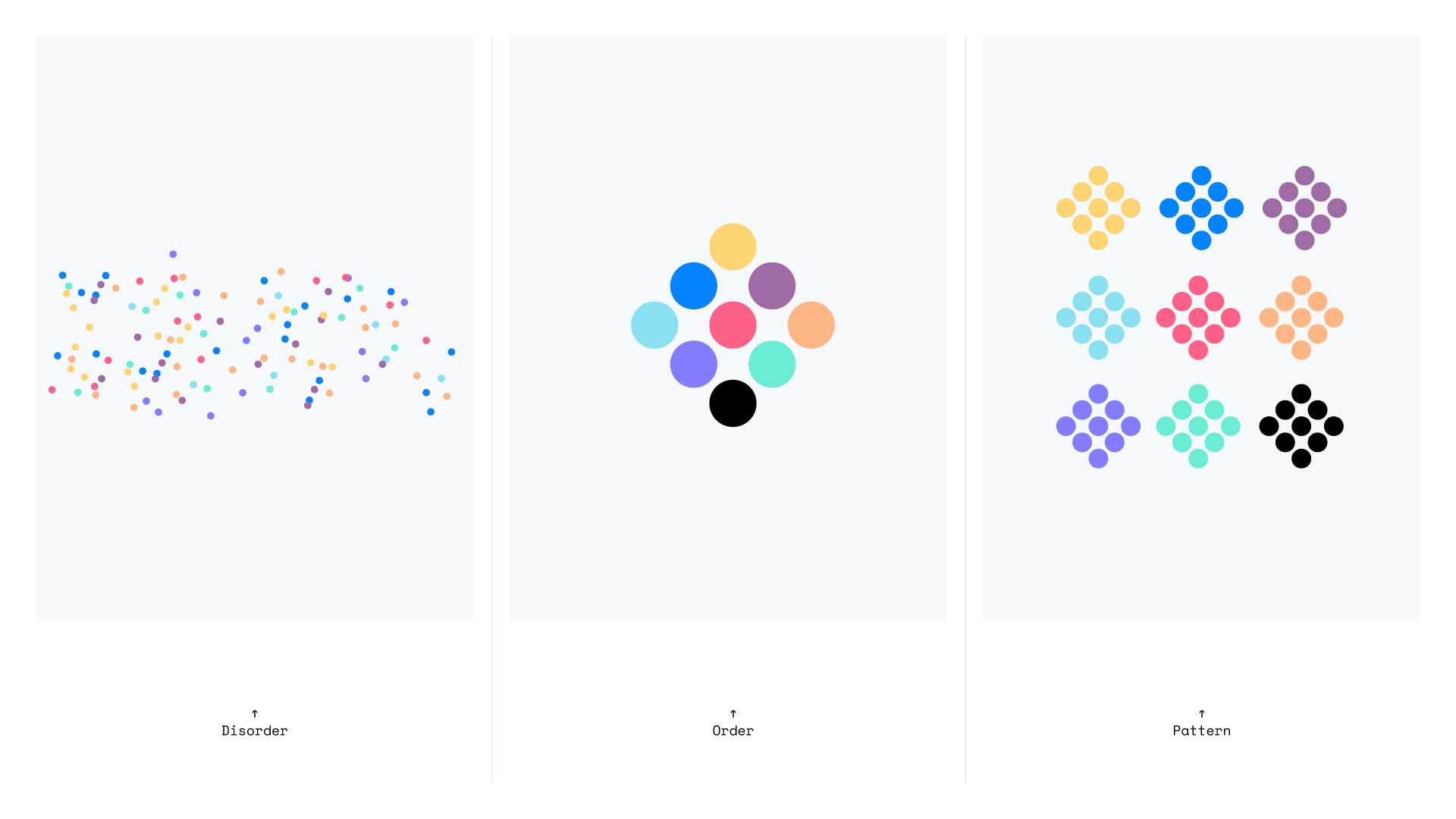
Order — As you can see there are 9 colours. Each of these colours can be grouped together to form connected patterns. Doing this for the audience beforehand reduces the amount of time they have to spend looking for a pattern.
— Applied to Slides
-
![]()
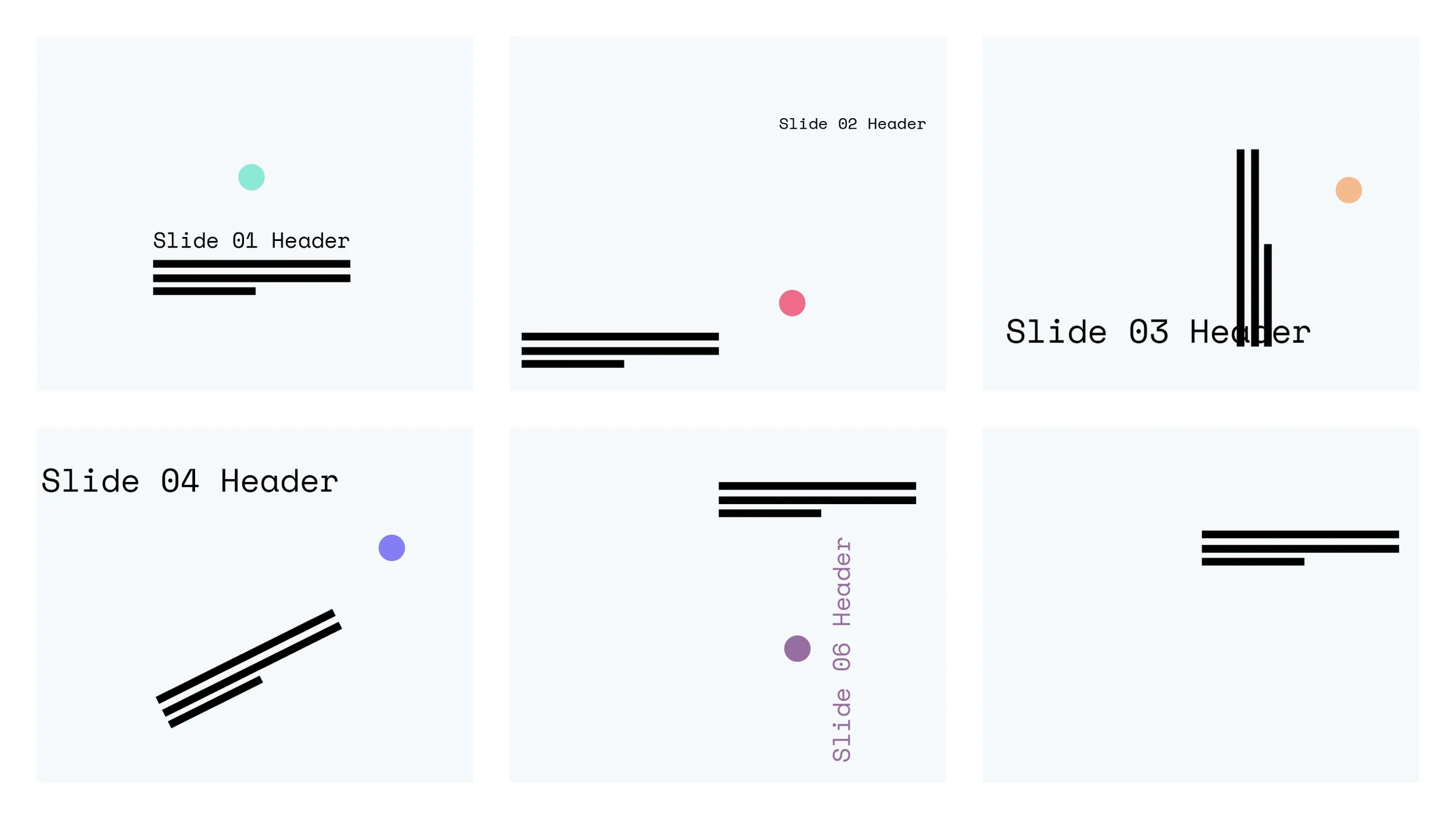
Slide One — No pattern, the brain has to do extra work every time it looks at a new one.
-
![]()
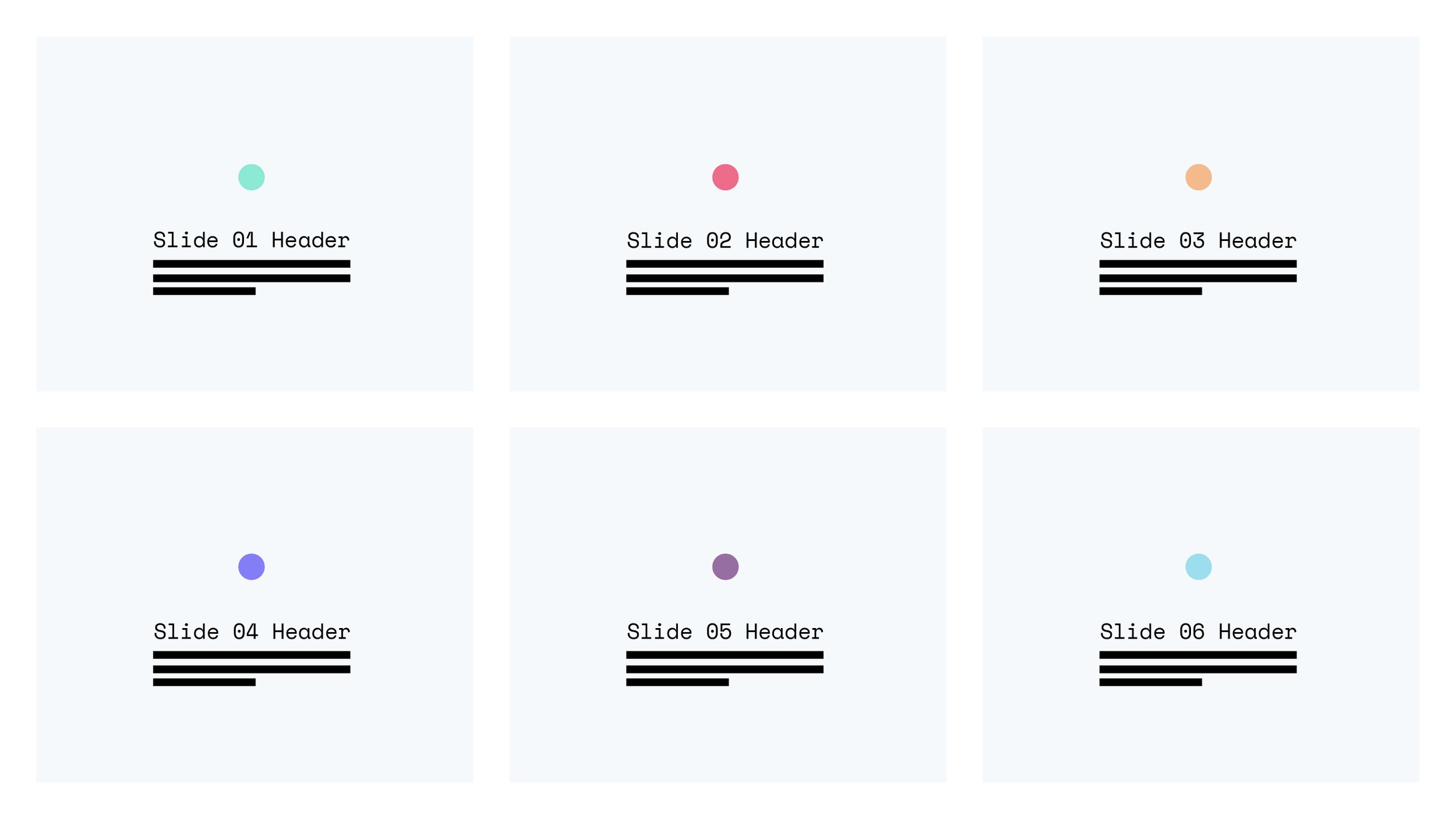
Slide Two — Extra work has now been removed - the brain knows the pattern and can instead focus on comprehending the content.
🚀 Where to Start
Visual patterns increase the chances that your communications will be successful, and are quite easy to implement with a bit of planning.
By mixing and matching grid styles, you can create chunks of slides that stay consistent without becoming dull.